Material Separation & Water Treatment
Three Decades of Proven Expertise Serving Tennessee’s Dredging and Water Treatment Needs
Separation Equipment Solutions
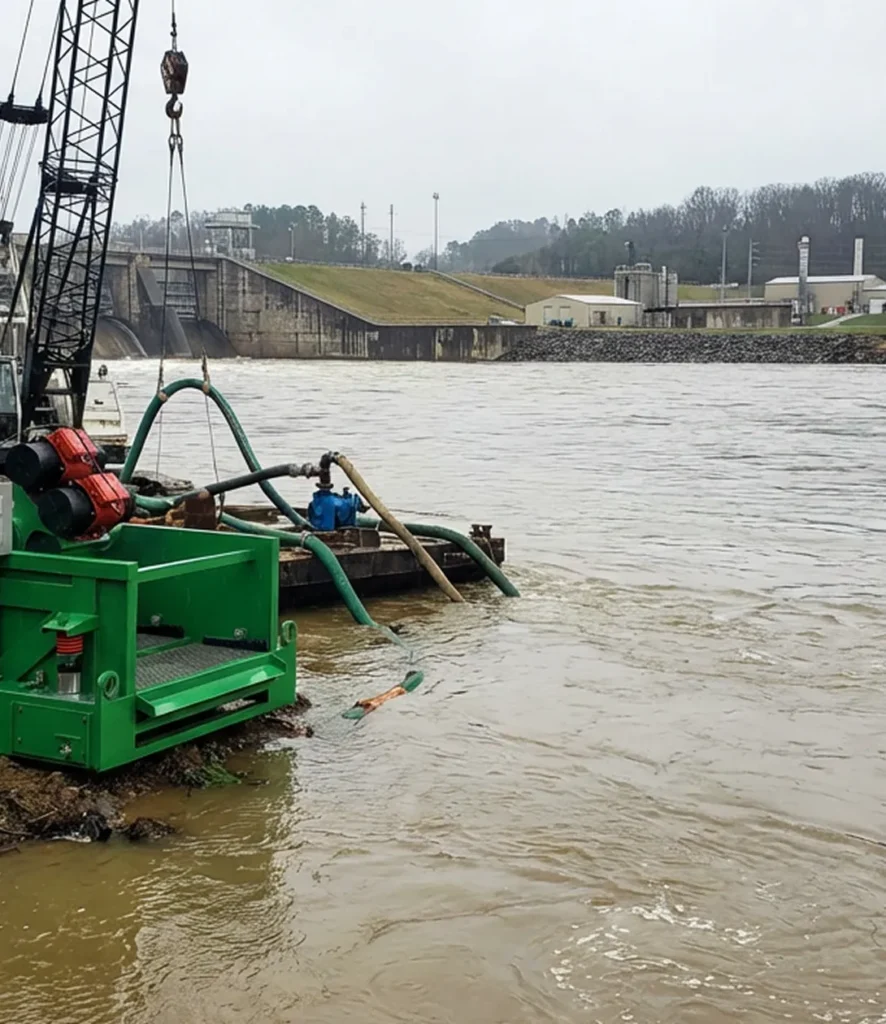
We deliver high-performance material separation solutions designed for the real-world conditions encountered in local rivers, reservoirs, and municipal lagoons. From TVA-managed reservoirs to industrial sites along the Cumberland River corridor, our material separation and water treatment equipment is engineered to handle fine sediments, heavy solids, and variable flow conditions common throughout the region. These material-separation services, relied on by Tennessee operators, are designed to improve dredging efficiency, reduce handling costs, and support consistent downstream processing.
Our advanced sedimentation and separation systems provide precise solids control while supporting the integrated water treatment services Tennessee facilities require for regulatory compliance and long-term performance. By pairing reliable separation technology with proven material transport methods, we ensure separated solids and clarified water are managed efficiently from start to finish. This practical, field-tested approach makes our material separation and water treatment equipment a dependable choice for dredging, remediation, and water management projects across Middle and East Tennessee.
Equipment for Material Separation & Water Treatment
Patented Vacuum Dewatering Solutions for Slurry Management
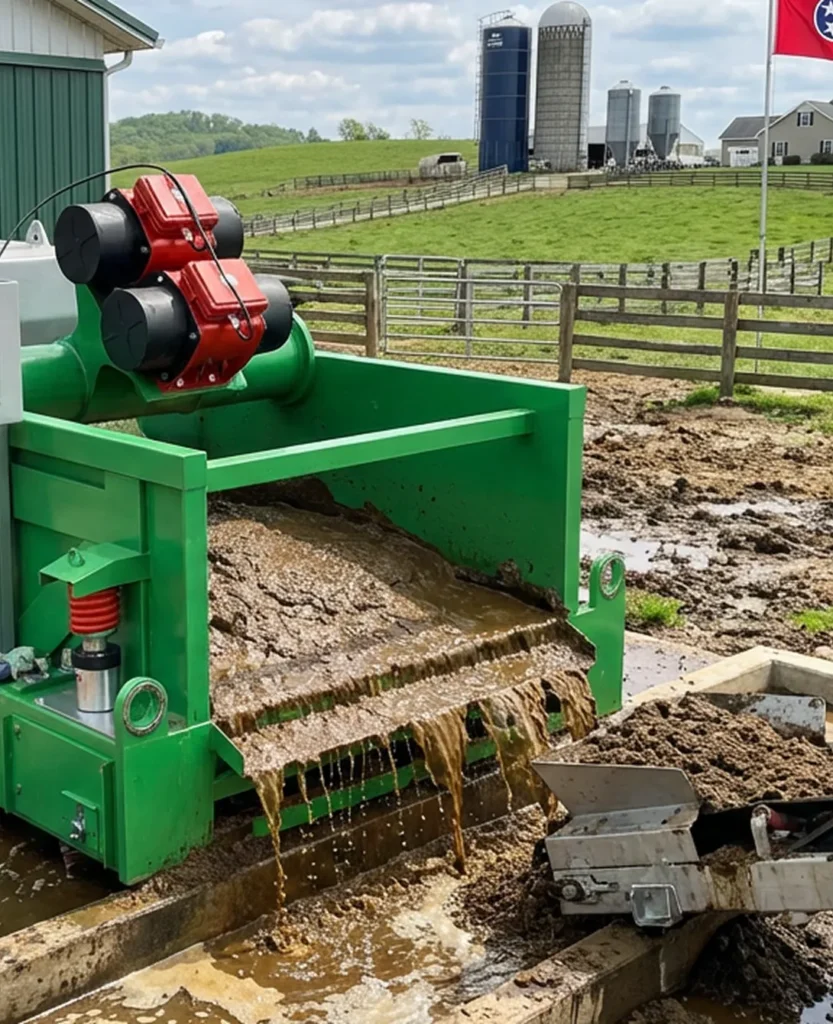
The patented slurry-separation vacuum dewatering system used by Tennessee Dredge is engineered to meet the demanding conditions encountered across the Cumberland River basin, TVA reservoirs, and industrial dredging sites throughout the state. Designed for faster processing than conventional drying methods, this technology uses high-efficiency vacuum dewatering systems to reduce the moisture content in dredged material significantly. The result is shorter project timelines, lower disposal volumes, and improved site logistics for river, reservoir, and industrial dredging work.
By combining proven field performance with modern vacuum dewatering equipment, this system supports projects across municipal waterways and industrial ponds in Nashville, Chattanooga, and the West Tennessee manufacturing corridors. It is particularly effective where space constraints, environmental oversight, or tight schedules demand reliable vacuum sediment dewatering.
High-Speed Dewatering Performance
This solution is built around powerful dewatering vacuum pumps that accelerate water removal from slurry far beyond traditional methods. Through controlled slurry vacuum dewatering, projects achieve faster material stabilization, reduced haul-off costs, and improved operational efficiency. This performance advantage is especially valuable on sediment-rich sites subject to storm-driven inflows and fluctuating water levels common in regional river systems.
Modular and Flexible System Design
The modular layout enables seamless integration with existing dredge setups, pipelines, and material-handling systems. These vacuum dewatering systems scale easily to match varying flow rates and project sizes, making them well-suited for both short-term maintenance dredging and long-term sediment management programs. This flexibility supports a range of applications, from reservoir cleanouts to industrial wastewater ponds.
Consistent Results in Demanding Conditions
Engineered for reliability, the system delivers stable performance even when handling high-solids, fine sediments, or variable slurry compositions. The core vacuum dewatering equipment maintains consistent suction and separation efficiency, ensuring dependable results across changing site conditions. This reliability is critical for projects operating under strict environmental and scheduling requirements.
Optimized Slurry Separation Technology
Advanced separation controls improve solids capture while producing cleaner discharge water. By enhancing vacuum sediment dewatering, the system reduces residual moisture and simplifies downstream handling. This supports more responsible material management and aligns with environmental expectations for river, lake, and industrial dredging projects.
Tennessee Dredge deploys this patented technology as part of an integrated slurry management approach. By combining slurry vacuum dewatering, high-performance dewatering vacuum pumps, and adaptable vacuum dewatering systems, both fine sediments and dense slurry are handled efficiently. The result is a proven solution that boosts productivity while meeting modern environmental and operational requirements.
Geotextile Tubes for Dewatering
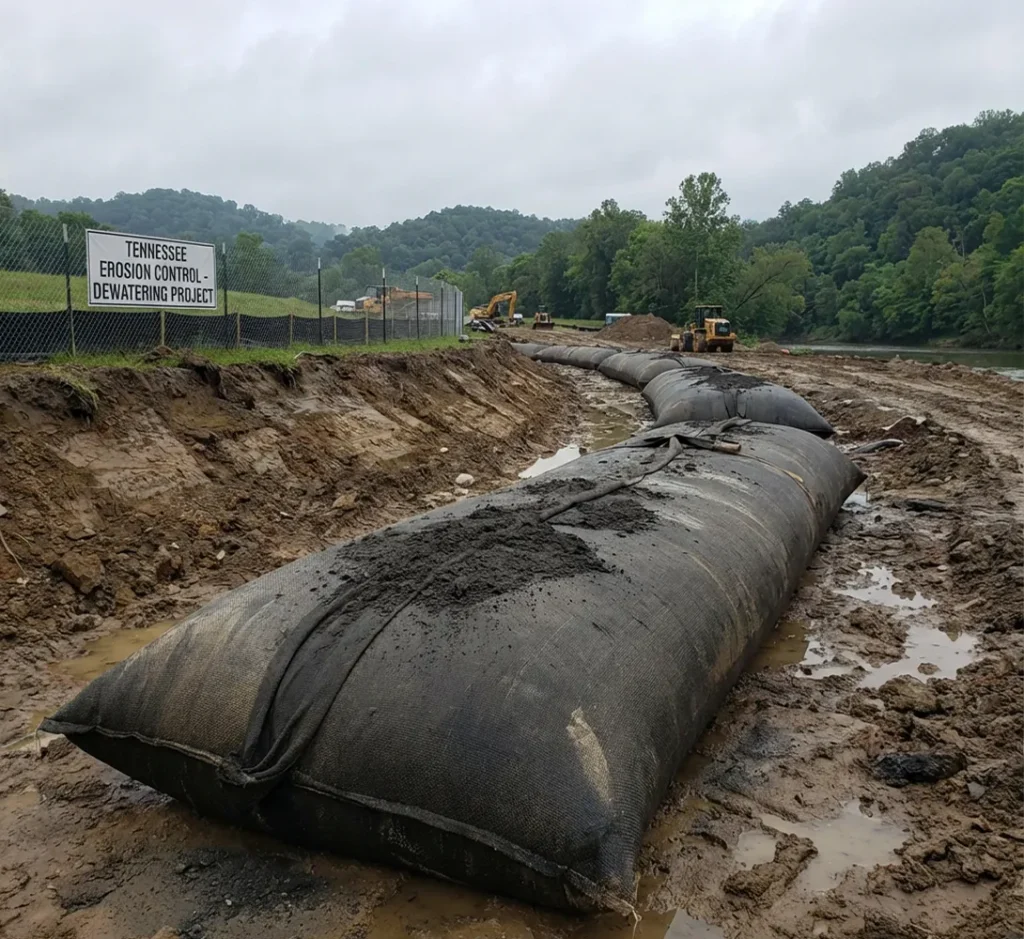
Tennessee Dredge provides geotextile tubes as a proven solution for efficient dewatering and material containment across a wide range of dredging projects. These high-strength geotextile tubes are well-suited for jobs along the Cumberland River basin, reservoir cleanouts near TVA-managed lakes, and municipal or industrial sites where controlled solids management is critical. By using dewatering geotextile tubes, dredged material is handled efficiently and systematically, supporting cleaner operations and faster project timelines.
High Capacity Performance
Designed to manage large slurry volumes, these dewatering geotextile tubes offer ample storage capacity for sediment generated during dredging operations. Their durable construction allows continuous filling without frequent change-outs, which is especially valuable on large-scale projects such as reservoir maintenance or stormwater basin cleanups common throughout Middle and East Tennessee. This capacity helps crews maintain steady progress while reducing downtime.
Cost-Efficient Dewatering Solution
Geotextile tube dewatering technology provides a cost-effective alternative to mechanical separation systems. By reducing reliance on complex equipment and minimizing labor requirements, projects benefit from lower operating costs without sacrificing performance. This approach is particularly effective for sediment dewatering tubes used on rural infrastructure projects, agricultural sites, and municipal work where budgets and timelines must stay tightly controlled.
Environmentally Responsible Operation
Sediment dewatering tubes are engineered to meet strict environmental standards, capturing solids while allowing filtered water to pass through safely. This process produces clearer effluent suitable for controlled discharge, helping projects comply with state and local environmental requirements. The use of geotextile tubes supports responsible dredging practices while protecting nearby waterways and sensitive habitats.
Efficient Solid and Liquid Separation
Advanced geotextile tube dewatering technology ensures reliable separation of fine sediments from water. By retaining solids and releasing clarified water, the system streamlines the dewatering process and simplifies material handling. This efficiency is especially beneficial for projects dealing with fine silts and organic material commonly found in ponds, lagoons, and river-adjacent sites.
Flexible Application Across Projects
Geotextile tubes are adaptable to a wide range of applications, from small pond cleanouts to large industrial dredging operations. Their versatility allows them to perform effectively across varying sediment types and site conditions. Whether supporting municipal maintenance, industrial dredging, or environmental remediation, dewatering geotextile tubes provide a reliable, scalable solution.
By integrating these capabilities, Tennessee Dredge delivers reliable dewatering solutions using geotextile tubes that balance performance, cost control, and environmental responsibility. These sediment dewatering tubes play a key role in completing dredging projects efficiently while maintaining high operational and regulatory standards.
Temporary Pond Building for Dewatering
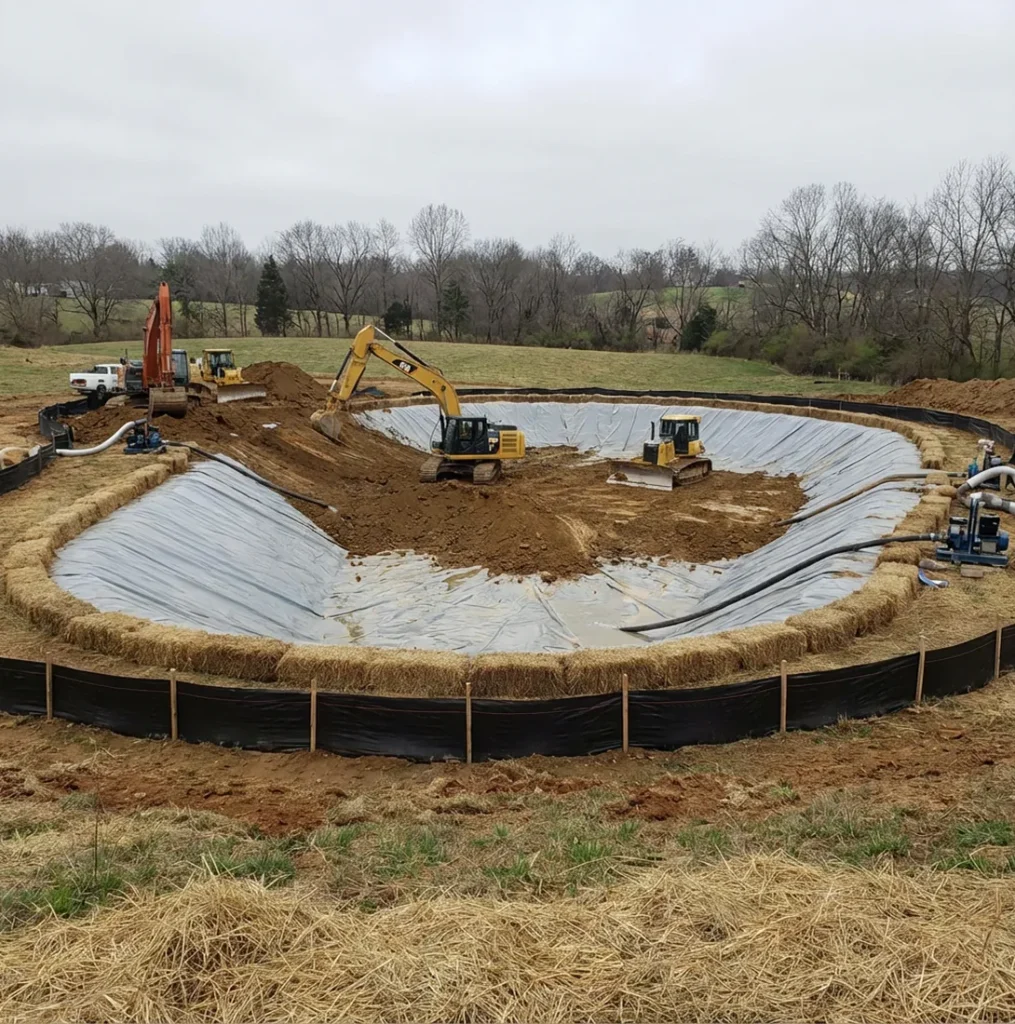
As part of a comprehensive dewatering and sediment management strategy, Tennessee Dredge provides temporary pond construction for controlled dewatering operations. These engineered ponds support customized dredging for ponds by managing water flow and capturing solids during active dredging. Temporary pond systems are commonly used on projects near the Cumberland River basin, agricultural sites, and construction corridors where flexible water control is required.
Customizable Pond Design
Each pond excavation and dredging plan is developed around site-specific conditions, sediment characteristics, and operational goals. These custom pond dredging solutions are designed to perform efficiently under varying soil types, groundwater conditions, and project timelines. From shallow excavation areas to deeper containment needs, every pond is built to support reliable pond-restoration dredging and effective dewatering.
Efficient Sediment Control
Temporary ponds are engineered to support pond sediment removal by providing a controlled settling environment. As slurry enters the pond, heavier solids separate naturally, allowing cleaner water to be managed or reused. This process supports sediment extraction from ponds while promoting sustainable sediment removal practices that reduce environmental impact and improve regulatory compliance.
Rapid Mobilization and Setup
Temporary pond systems are constructed quickly to keep projects moving. Fast deployment minimizes downtime and allows dewatering operations to begin without delay. This efficiency is especially valuable for time-sensitive infrastructure and environmental projects where maintaining schedules is critical.
Adaptable Project Applications
These pond systems are used across a wide range of applications, from municipal dewatering and construction support to industrial and environmental remediation work. Their flexibility allows them to scale easily, making them suitable for both small pond excavation and dredging, as well as larger sediment management programs.
Cost-Conscious Dewatering Approach
Temporary pond construction provides a practical alternative to permanent infrastructure. Once dewatering is complete, ponds can be removed or restored, reducing long-term costs. This approach delivers effective pond restoration dredging results while keeping project budgets under control.
By combining customized pond dredging with efficient pond sediment extraction, Tennessee Dredge delivers practical, field-proven solutions for temporary dewatering needs. Each project is executed with a focus on performance, environmental responsibility, and sustainable sediment removal from start to finish.
Water Treatment Solutions

At Tennessee Dredge, we deliver expert water treatment services in Tennessee designed to support dredging, construction, and industrial operations across the region. From river projects along the Tennessee River to industrial sites near the Cumberland corridor, our comprehensive water treatment solutions are engineered to remove contaminants efficiently while meeting strict state and federal discharge standards. These expert water treatment services support industrial water treatment in Tennessee, commercial water treatment solutions, and wastewater treatment services tied to dredging operations.
- Initial Screening and Pre-Treatment
Water generated during dredging and dewatering is first routed through coarse screening systems to remove debris, organics, and heavy sediment. This step is essential to protect downstream treatment components and is a standard part of our wastewater treatment services at both large and small sites.
- Coagulation and Flocculation
Chemical treatment is applied to bind fine particles into larger, settleable masses. This controlled process improves separation efficiency and supports industrial water treatment in Tennessee projects where fine silts and clays are common, especially in reservoir and river work.
- Sedimentation
Treated water flows into sedimentation basins where solids settle naturally. The resulting sludge is removed for proper handling, while clarified water advances through the system. This stage is critical for eco-friendly water treatment methods used near sensitive waterways.
- Filtration
Multi-media and membrane filtration systems remove remaining suspended particles. These systems are widely used in commercial water treatment solutions for municipal and industrial dredging projects throughout the region.
- Advanced Oxidation Processes
To address dissolved contaminants and pathogens, advanced oxidation methods such as UV treatment and ozone are employed. These processes support comprehensive water treatment solutions that require higher water quality for reuse or controlled discharge.
- Adsorption
Activated carbon adsorption removes trace organics, odors, and residual compounds. This step enhances overall water clarity and quality, supporting expert water treatment services for industrial and commercial clients.
- Disinfection
Final disinfection ensures microbiological safety through chlorination or UV systems. This guarantees treated water meets environmental and public health requirements before release or reuse.
- Monitoring and Quality Control
Continuous monitoring and regular sampling verify system performance throughout the treatment cycle. These controls ensure compliance with Tennessee water treatment regulations while enabling real-time adjustments to changing site conditions.
By integrating proven treatment processes with field-tested systems, Tennessee Dredge provides reliable wastewater and industrial water treatment services that protect waterways, enhance project efficiency, and meet modern environmental standards.
Water Treatment Process at Tennessee Dredge
As part of a comprehensive dewatering and sediment management strategy, Tennessee Dredge provides temporary pond construction for controlled dewatering operations. These engineered ponds support customized dredging for ponds by managing water flow and capturing solids during active dredging. Temporary pond systems are commonly used on projects near the Cumberland River basin, agricultural sites, and construction corridors where flexible water control is required.
- Coagulation and Flocculation
Process
Positively charged treatment chemicals are introduced to neutralize suspended, negatively charged particles in the water.
Outcome
Fine contaminants bind together to form larger floc particles, making them easier to remove during downstream treatment stages.
- Sedimentation
Process
Water is directed into sedimentation basins, where floc particles settle naturally under controlled conditions.
Outcome
Clear water separates from settled sludge at the bottom of the tank, significantly reducing turbidity and suspended solids.
- Filtration
Process
The clarified water passes through advanced filtration media to capture remaining fine particles.
Outcome
Additional contaminant removal results in consistently clear water suitable for further treatment or discharge.
- Disinfection
Process
Disinfection methods, such as chlorination, UV treatment, or ozonation, are selected based on project requirements.
Outcome
Harmful microorganisms are effectively eliminated, ensuring water safety and regulatory compliance.
- pH Adjustment
Process
Water chemistry is adjusted to achieve a balanced pH.
Outcome
Neutralized water reduces corrosion risk and improves overall safety for reuse or release.
- Optional Fluoridation
Process
Fluoride may be added to public water systems as required.
Outcome
Supports long-term public health objectives by helping reduce tooth decay.
- Final Treatment and Distribution
Process
Treated water is stored, monitored, and prepared for controlled discharge or reuse.
Outcome
A reliable supply of high-quality water that meets operational, environmental, and regulatory standards across a wide range of projects.
Frequently Asked Questions
What dredging services does Tennessee Dredge provide?
The company delivers a full range of dredging solutions, including river and lake dredging, pond restoration, sediment removal, dewatering, and material handling for municipal, industrial, environmental, and private projects.
Does Tennessee Dredge handle both small and large-scale projects?
Yes. Projects range from small pond cleanouts and drainage improvements to large-scale infrastructure, reservoir maintenance, and industrial dredging operations that require heavy-duty equipment.
What types of equipment are used on dredging projects?
Operations utilize advanced hydraulic dredges, excavator pump attachments, dredge sleds, dewatering systems, and specialty pumps designed for high-solids and abrasive materials.
Can the team assist with environmental and regulatory compliance?
Absolutely. Every project is planned with environmental protection in mind, including sediment containment, proper disposal, and coordination with permitting agencies to meet regulatory requirements.
Do you offer pond dredging and restoration services?
Yes. Services include pond excavation, sediment extraction, restoration dredging, and customized solutions to improve water depth, quality, and long-term performance.
Is dewatering included as part of dredging services?
Dewatering is a core capability. The company uses vacuum dewatering systems, geotextile tubes, and temporary pond building solutions to manage slurry and reduce disposal costs.
What industries typically work with Tennessee Dredge?
Clients include municipalities, construction contractors, manufacturers, mining operations, utilities, agricultural facilities, and environmental consultants.
How does Tennessee Dredge handle sediment disposal?
Sediment is managed using sustainable removal practices, including on-site dewatering, reuse where feasible, and transport to approved disposal or processing locations.
Can projects be completed in shallow or hard-to-access areas?
Yes. Specialized equipment and modular dredging systems allow work in shallow water, confined spaces, and locations with limited access points.
Why choose Tennessee Dredge over other dredging contractors?
Clients value the company’s long-term experience, reliable equipment, practical field knowledge, and ability to deliver efficient, compliant solutions without overpromising timelines or budgets.